
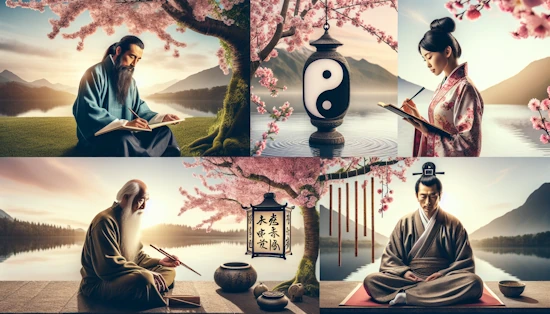
Eastern philosophy, with its vast array of concepts — karma, dependent origination, wu wei, sunyata, the pursuit of moksha — offers one of humanity’s most sustained and rigorous examinations of life’s most profound questions. Unlike many popular misconceptions, Eastern philosophical traditions are not simply collections of calming aphorisms or wellness prescriptions. They are serious, demanding intellectual and spiritual systems that have challenged human beings for millennia to examine the nature of consciousness, the roots of suffering, the structure of reality, and the possibility of genuine liberation. Originating across the Indian subcontinent, China, Japan, Korea, and Southeast Asia, these traditions encompass an extraordinary diversity of thought — from the radical non-self doctrine of early Buddhism to the relational ethics of Confucianism, from the mystical naturalism of Taoism to the rigorous epistemology of Nyāya.
What unites them, despite their differences, is a shared insistence that human beings as ordinarily constituted are not yet fully awake — that there is a deeper truth about existence accessible through disciplined practice, careful inquiry, and a willingness to relinquish comfortable illusions. This is not a message of easy consolation. It is, in many traditions, a profoundly unsettling one. The Buddha’s first teaching was not about peace or bliss, but about dukkha — the pervasive unsatisfactoriness at the heart of conditioned existence. Lao Tzu’s Tao Te Ching opens not with a reassuring statement, but with a warning: the Tao that can be named is not the eternal Tao.
This article traverses the intellectual terrain of the Eastern philosophical landscape, examining seminal thinkers such as Lao Tzu, Siddhartha Gautama, and Confucius, as well as lesser-known figures whose contributions deserve equal attention. We explore the foundational texts, the major themes, and the specific doctrines that give these traditions their depth and rigour. We also undertake a serious comparison with Western philosophical thought — not to declare a winner, but to illuminate the distinctive presuppositions of each and the genuine challenges they pose to one another. Finally, we address the real challenges and criticisms these traditions face — both internally and from outside — without minimising them. By engaging with Eastern wisdom honestly, we honour it far more than by reducing it to inspiring quotes.
The Foundations of Eastern Philosophies
Eastern philosophy, often referred to as Asian philosophy, encompasses a vast and internally diverse range of intellectual traditions originating across East Asia, South Asia, and Southeast Asia. It would be a mistake to treat these as a single, unified system — the differences between Advaita Vedanta and Theravada Buddhism, or between Confucianism and Taoism, are as significant as any differences between major Western schools. What the label “Eastern philosophy” usefully captures is a set of traditions that emerged largely independently of the Greco-Roman intellectual lineage and that share certain recurring concerns: the relationship between the individual and the cosmos, the nature of the mind and consciousness, the grounds of ethical life, and the possibility of liberation from suffering or ignorance.
Indian Philosophical Traditions:
- Historical Roots: Indian philosophy traces its earliest textual roots to the Rigveda (composed roughly between 1500 and 1200 BCE), making it one of the oldest sustained philosophical traditions in human history. The later Upanishads (c. 800–200 BCE) represent a remarkable philosophical turn inward, shifting attention from ritual cosmology to the nature of consciousness itself — asking not what the gods demand, but what the self fundamentally is. The philosophical efflorescence that followed, particularly between the 6th century BCE and the 7th century CE, produced an intellectual landscape of extraordinary richness and rigour.
- Major Schools: The philosophical landscape of India is divided into āstika (orthodox) schools, which accept the authority of the Vedas, and nāstika (heterodox) schools, which do not. The six orthodox schools — Sāmkhya, Yoga, Nyāya, Vaiśeṣika, Mīmāṃsā, and Vedānta — cover an enormous range of inquiry, from formal logic and epistemology (Nyāya) to metaphysical dualism (Sāmkhya) to non-dualism (Advaita Vedānta). The heterodox schools include Buddhism, Jainism, and the materialist Cārvāka — all of which, in different ways, challenged Vedic authority while developing sophisticated philosophical systems of their own. It is worth noting that these schools did not exist in isolation: centuries of rigorous debate, commentary, and counter-argument produced a tradition of philosophical dialogue comparable in sophistication to anything in the Western canon.
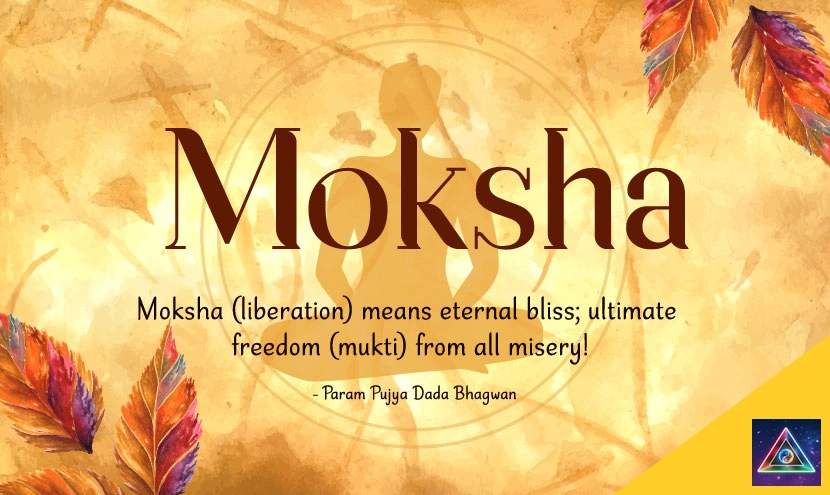
- Key Concepts: Central to much Indian philosophy are the four puruṣārthas, or aims of human life: dharma (right action, duty, ethics), artha (material purpose and well-being), kāma (desire and aesthetic pleasure), and moksha (liberation from the cycle of rebirth). This framework is notable for its realism: it does not dismiss material life or desire, but situates them within a larger teleological structure oriented toward liberation. The tension between engaging fully with worldly life and ultimately transcending it is one of the generative tensions running through the whole of Indian philosophy.
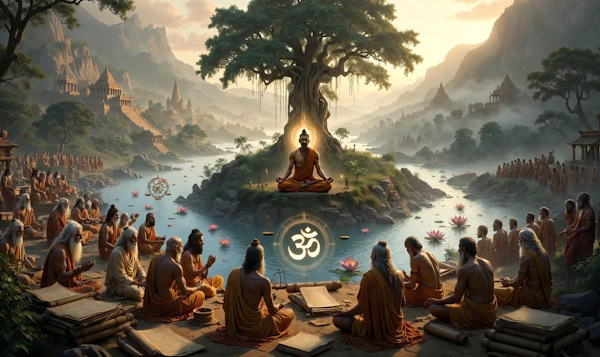
Philosophical Schools Across Asia:
- Chinese Philosophy: The classical period of Chinese philosophy (roughly the 6th to 3rd centuries BCE, known as the Hundred Schools of Thought) was shaped by a period of social and political upheaval that gave thinkers urgent practical questions to address alongside metaphysical ones. Confucianism concerned itself with the restoration of social and moral order through the cultivation of virtue and the proper ordering of relationships. Taoism offered a contrasting vision — not social engineering but attunement to a natural order that precedes and transcends human institutions. Legalism argued for strict law and centralised authority. Mohism, often overlooked in Western accounts, developed a consequentialist ethics, a rudimentary logic, and a theology based on the will of Heaven. These schools were not merely abstract: they competed for the attention of rulers and shaped the governance of states. The synthesis that emerged — particularly the eventual dominance of Confucianism in the Han dynasty — left an indelible mark on East Asian civilisation that persists to this day.
- Japanese Philosophy: Japanese philosophical thought developed in complex dialogue with Chinese imports — Buddhism arrived via Korea in the 6th century CE, and Confucian learning followed closely. Yet Japan produced its own philosophical contributions of considerable originality. The Kyoto School of the 20th century, founded by Nishida Kitarō, engaged seriously and critically with Western philosophy — Kant, Hegel, Heidegger — while drawing on Zen and Buddhist categories to articulate a non-dualistic philosophy of “pure experience” and the concept of “absolute nothingness” (zettai mu). Shinto, Japan’s indigenous religious tradition, offers a philosophy of immanence — the sacred is not transcendent but present in the natural world, in particular places, objects, and beings. The practice of Zen, with its radical emphasis on direct experience over doctrinal knowledge, produced a philosophical culture deeply suspicious of conceptual elaboration and oriented toward immediate, embodied awakening.
- Korean and Vietnamese Philosophies: These traditions developed substantially under the influence of Confucian and Buddhist thought, yet generated their own distinctive emphases. Korean Neo-Confucianism produced notable debates on the relationship between principle (i) and material force (gi) that rivalled the sophistication of their Chinese counterparts. Vietnamese Buddhism, particularly in the Zen (Thiền) tradition, developed a politically engaged dimension most visible in the 20th century, where monks such as Thích Nhất Hạnh articulated what he called “engaged Buddhism” — the application of ethical consciousness to social and political life without abandoning contemplative depth.
Core Themes and Approaches:
- Holistic and Relational Ontology: A recurring feature of Eastern philosophical traditions is the tendency to understand reality in terms of relationships, processes, and interdependence rather than discrete, self-subsisting substances. This is not mere mysticism — it is a serious metaphysical claim with significant implications for ethics, epistemology, and the understanding of the self. The Buddhist concept of pratītyasamutpāda (dependent origination) holds that no phenomenon arises independently but only in dependence on conditions. The Taoist notion of the interplay between yin and yang similarly resists any ontology of fixed essences. These are positions with genuine philosophical force, and they anticipate by centuries certain developments in process philosophy and systems theory in the West.
- Time and Reality: Many Asian philosophical traditions understand time as cyclical rather than linear — not in a fatalistic sense, but in a way that reframes the human situation within vast temporal and cosmological frameworks. The Hindu concept of kalpas (cosmic cycles of creation and dissolution), the Buddhist understanding of saṃsāra as a beginningless cycle of conditioned existence, and the Taoist sense of the eternal recurrence of natural rhythms all challenge the Western assumption of time as a one-directional arrow from creation to eschaton. These frameworks also bear on the concept of illusion: the Advaita Vedānta concept of māyā does not mean that the world is simply “not real” in a naive sense, but that ordinary perception, conditioned by ignorance (avidyā), superimposes a false sense of solidity and permanence onto what is in fact a dynamic, interdependent flux.
- Ethical and Social Dimensions: Eastern philosophies do not treat ethics as a separate discipline from metaphysics and soteriology — the three are deeply intertwined. In Buddhism, ethical conduct (sīla) is not merely instrumental but is understood as both the expression of wisdom and its precondition. In Confucianism, the cultivation of moral virtue (de) is inseparable from the formation of a harmonious self, family, and state. Ethical life, in these traditions, is not a matter of following external rules but of transforming oneself at the deepest level — a demand that is far more radical, and far more difficult, than it might first appear.
Eastern philosophy’s rich and varied traditions continue to offer profound and searching insights into the ethical, social, and spiritual questions of human existence — not as a comfortable supplement to Western modernity, but often as a searching challenge to its deepest assumptions.
Key Philosophers and Their Teachings
Lao Tzu and Taoism: Lao Tzu remains a figure shrouded in historical uncertainty — indeed, some scholars question whether a single historical individual by that name existed at all, or whether the Tao Te Ching is a composite text assembled over time. What is not in question is the extraordinary philosophical power of the text attributed to him, composed somewhere between the 6th and 4th centuries BCE. The Tao Te Ching is one of the most translated texts in human history, and yet its central concept — the Tao, or Way — deliberately resists definition. The text’s opening lines are a philosophical statement as much as a literary one: to name the Tao is already to have missed it. The Tao is not a god, not a cosmic law, not a moral principle — it is the nameless ground of all things, the spontaneous self-organising principle of reality itself.
Key principles of Taoist philosophy include:
- Wu wei (non-action or non-forcing): often misunderstood as passivity, wu wei is better understood as acting in perfect alignment with the natural flow of things — without struggle, contrivance, or ego-driven effort. It is not indolence but a profound attentiveness to the way things actually work, and an abandonment of the self-assertion that disrupts natural harmony.
- Ziran (naturalness, spontaneity): closely related to wu wei, ziran describes the condition of acting naturally and freely — not in the sense of following every impulse, but in the sense of having shed the artificialities imposed by social convention and ego. The Taoist sage is not an ascetic withdrawn from the world, but one who moves through it without friction, leaving no trace.
- The relativity of opposites: the Tao Te Ching consistently subverts the fixed oppositions by which ordinary thinking operates — beauty and ugliness, being and non-being, strength and weakness. The genuinely strong, the text suggests, knows how to yield; the truly full is like emptiness. This is not paradox for its own sake but a rigorous critique of the hardened, dualistic mind that mistakes its own categories for the structure of reality.
- Political philosophy: the Tao Te Ching has a sharply critical dimension that is often glossed over in popular reception. Its vision of ideal governance is radically minimalist — the best ruler is one whose subjects barely know he exists. It is deeply sceptical of the Confucian programme of moral education and ritual regulation, viewing them as remedies that worsen the disease by replacing spontaneous virtue with its performance.
Zhuangzi, the other towering figure of classical Taoism, extended these themes with extraordinary literary inventiveness. Where the Tao Te Ching is aphoristic and dense, the Zhuangzi is playful, ironic, and formally experimental — deploying parables, dialogues, and flights of fantasy to undermine the reader’s assumptions. His philosophy of perspectivism — the recognition that every viewpoint is partial and conditioned — anticipates themes in modern epistemology and philosophy of mind. His treatment of death is one of the most philosophically serious in any tradition: not a consolation, but a genuine transformation of one’s relationship to impermanence.
Siddhartha Gautama (the Buddha): The historical Buddha, Siddhartha Gautama, lived in northern India in the 5th or 4th century BCE, though the precise dates remain a matter of scholarly debate. What is clear is that his teaching — the Dharma — represented a radical departure from the Brahmanical orthodoxy of his time, and that its implications have continued to unfold across 2,500 years and dozens of cultural contexts without exhaustion. The Buddha was, above all, a diagnostician of the human condition. His teaching begins not with metaphysics but with a clinical observation: existence as ordinarily experienced is characterised by dukkha — a Pāli term that encompasses suffering, unsatisfactoriness, and the subtle dis-ease that pervades even pleasant experience because of its impermanence.
His doctrine revolves around several interlocking principles:
- The Four Noble Truths: dukkha (the fact of suffering and unsatisfactoriness), samudāya (its arising from craving and ignorance), nirodha (its cessation), and magga (the path leading to its cessation). This structure is modelled on the ancient Indian medical formula of diagnosis, aetiology, prognosis, and treatment — the Buddha presenting himself not as a metaphysician or theologian, but as a physician of the mind.
- The Three Marks of Existence: anicca (impermanence), dukkha (unsatisfactoriness), and anattā (non-self). The last is the most philosophically challenging and the most distinctive of Buddhist teaching. The doctrine of anattā does not assert that there is no experience, but that there is no unchanging, substantial self at the centre of experience — what we take to be a fixed self is in fact a dynamic, ever-changing process of interacting physical and mental factors (the five khandhas). This is not nihilism — the Buddha explicitly rejected the view that nothing exists after death — but a radical critique of the deeply ingrained assumption of selfhood that underlies all craving and aversion.
- The Noble Eightfold Path: right view, right intention, right speech, right action, right livelihood, right effort, right mindfulness, and right concentration. This is the practical programme of the Buddha’s teaching — not a set of commandments but an integrated training of wisdom, ethics, and mental cultivation. It is worth emphasising that “right” here (sammā) does not mean “morally correct” in a rule-bound sense but “complete” or “perfect” — a qualitative rather than a merely normative category.
- The concept of Nirvāṇa: often romanticised in popular accounts as a state of bliss, Nirvāṇa is, in the earliest Buddhist texts, primarily defined by negation — the “blowing out” of the fires of greed, hatred, and delusion. It is not a place or a mystical state of absorption, but the complete extinguishing of the conditions that generate suffering. Whether this constitutes an “experience” at all, and what if anything persists after the death of an awakened being, are questions the Buddha deliberately left unanswered — his famous “undeclared questions” (avyākata) — on the grounds that they do not conduce to liberation.
The subsequent development of Buddhist thought across the Theravāda, Mahāyāna, and Vajrayāna traditions vastly expanded the philosophical resources of the tradition. Nāgārjuna’s Mādhyamaka philosophy (c. 2nd century CE), with its rigorous deconstruction of all fixed views through the doctrine of śūnyatā (emptiness), is one of the most demanding and penetrating systems of thought produced by any civilisation. The Yogācāra school, associated with Vasubandhu and Asaṅga, developed a sophisticated philosophy of mind that anticipates certain themes in phenomenology and cognitive science. Chan (Zen) Buddhism, as it developed in China and Japan, took the anti-conceptual thrust of the tradition to its radical conclusion, creating a form of practice centred on direct pointing to mind itself, outside doctrine and scripture.
Confucius and His Ideologies: Confucius (Kong Qiu, 551–479 BCE) was, in his own lifetime, a largely unsuccessful political reformer — a man who believed deeply that the social and moral order of the Zhou dynasty could be restored through the cultivation of virtue and the correct performance of ritual, and who was repeatedly passed over or dismissed by the rulers he sought to advise. The irony of history is that his failure as a political actor became the condition of his enduring philosophical influence. The Analects (Lúnyǔ), compiled by his disciples after his death, is not a systematic treatise but a collection of conversations, anecdotes, and maxims — a portrait of a man thinking rigorously about how to live and how to govern.
His philosophies focus on:
- Rén (benevolence, humaneness, love): the central virtue in Confucian ethics, rén is notoriously difficult to define with precision — Confucius himself gives different characterisations in different contexts. At its core, it is the quality of genuine care for others that finds expression in all the specific virtues: loyalty, filial piety, respect, reciprocity. The Confucian “Golden Rule” — “Do not impose on others what you yourself do not desire” — is one of the earliest formulations of a reciprocity principle in any philosophical tradition.
- Li (ritual propriety, rites): li encompasses the rituals, customs, and norms that structure social life — from the elaborate ceremonies of ancestor veneration to the everyday protocols of greeting, conversation, and conduct. For Confucius, li is not mere formalism. Properly understood and performed, ritual is the outer expression of inner virtue; it is the medium through which morality becomes embodied and social harmony becomes real. The critique that Confucianism reduces ethics to social conformism misses this point: Confucius was acutely aware of the difference between genuine virtue and its performance, and his sharpest criticisms are reserved for those who maintain the appearance of propriety while lacking its substance.
- The rectification of names (zhengming): one of the most politically significant of Confucian doctrines is the insistence that social disorder follows from the misuse of language — from calling things what they are not, and from the gap between roles and their proper conduct. “Let the ruler be a ruler, the minister a minister, the father a father, the son a son.” This is not mere conservatism but a serious claim about the relationship between language, social reality, and moral life.
- Self-cultivation and the exemplary person (junzi): the ideal of the junzi — often translated as “gentleman” but better rendered as “exemplary person” — is central to the Confucian programme. Self-cultivation is not a private spiritual project but an inherently social and political one: the transformed individual becomes a source of moral influence that radiates outward through family, community, and state. The Confucian vision of social harmony is not imposed from above by law or force but radiates from the moral centre of cultivated persons.
Beyond these three towering figures, the tradition of Eastern philosophy includes numerous thinkers whose contributions deserve serious attention. Nāgārjuna’s radical deconstruction of all fixed metaphysical positions remains philosophically unmatched in its rigour. Śaṅkara’s Advaita Vedānta articulates a vision of non-dual consciousness with extraordinary precision and power. Mencius and Xunzi, the two great inheritors of Confucius, represent genuinely different philosophical temperaments — Mencius arguing for the innate goodness of human nature, Xunzi for its natural tendency to disorder that must be corrected through education and ritual. Dogen Zenji’s Shōbōgenzō, written in 13th-century Japan, is one of the most philosophically ambitious and linguistically radical texts produced by any Buddhist tradition. These thinkers do not merely supplement the three figures discussed above — they challenge, extend, and in some cases fundamentally revise them.
These teachings from key philosophers not only provide a foundation for personal and societal ethics but also offer a comprehensive view into the spiritual and metaphysical dimensions that give Eastern thought its distinctive character. Their diverse approaches — from Taoist attunement to the natural world, to Buddhist investigation of consciousness and the structure of experience, to Confucian cultivation of the moral self within community — constitute a demanding and coherent philosophical inheritance. To engage with them seriously is to encounter challenges to some of the deepest assumptions of modern Western culture: the primacy of the individual, the linearity of progress, the separability of fact and value, the subordination of contemplation to action.
Major Themes in Eastern Philosophies
Asian philosophical traditions encompass schools of thought that delve into profound themes addressing the nature of reality, the structure of the self, and the conditions of genuine human flourishing. These are not merely interesting theoretical positions — they are, in each case, embedded in traditions of practice designed to transform the person who genuinely engages with them. Philosophy, in the Eastern sense, is not primarily an academic discipline but a way of life.
Ultimate Reality and the Problem of Knowledge:
- One of the most striking and demanding features of Eastern metaphysics is its treatment of the relationship between ordinary knowledge and ultimate reality. In Advaita Vedānta, the phenomenal world as ordinarily perceived is characterised by superimposition (adhyāsa) — the projection onto Brahman (the non-dual ultimate reality) of distinctions and attributes that do not truly belong to it. Liberation (moksha) is not the acquisition of new knowledge but the removal of ignorance (avidyā) that has always obscured what was already the case. In Buddhism, similarly, awakening (bodhi) is not the creation of a new state but the seeing through of an illusion — the illusion of a fixed self and a world of independently existing objects — that has generated endless suffering. In Taoism, the deepest wisdom is a kind of unknowing: the sage has not accumulated more knowledge than ordinary people but has shed the conceptual overlays that obscure the Tao.
- This epistemological dimension is crucial and is often missed in popular accounts. Eastern philosophies do not simply urge us to “be present” or “find inner peace” — they make demanding and specific claims about the structure of ordinary consciousness, the ways in which it systematically misrepresents reality, and the rigorous practices required to correct this. These are empirical claims, in a broad sense — claims about what will be found if one looks carefully enough, with a sufficiently trained and purified attention.
Practical Pathways to Spiritual Liberation:
- Meditation and Contemplative Practice: Meditation in the Eastern traditions is not a relaxation technique — it is a rigorous training of attention designed to alter the fundamental structure of experience. In the Buddhist vipassanā (insight) tradition, systematic observation of the impermanence, unsatisfactoriness, and selflessness of all arising phenomena is the direct means of liberation. In the samatha (tranquillity) tradition, the progressive refinement and stabilisation of attention culminates in the jhānas — states of deep absorption in which ordinary conceptual activity ceases and consciousness becomes unusually clear and unified. Yoga, in its classical Patañjalian form, is similarly not a series of physical postures but an eight-limbed discipline (ashtanga) culminating in samādhi — a state of complete meditative absorption in which the ordinary subject-object structure of experience is transcended. The physical āsana practice familiar in Western contexts represents only the third of these eight limbs.
- Ethical Living as Spiritual Foundation: What distinguishes the Eastern approach to ethics from many Western counterparts is the insistence that ethical conduct is not merely a social contract or a set of constraints on self-interest, but a direct expression of spiritual development and its necessary precondition. In Buddhist psychology, ethical violations are understood as arising from greed, hatred, and delusion — the same root afflictions (kilesas) that generate suffering. To harm another is not merely to break a rule but to act from and reinforce the afflictive states that bind one to suffering. Conversely, genuine moral transformation — the cultivation of compassion (karuṇā), loving-kindness (mettā), equanimity (upekkhā), and sympathetic joy (muditā) — is both a means and a sign of deepening spiritual consciousness. This integration of ethics and spirituality is one of the most valuable and distinctive features of Eastern philosophy, and one of the most challenging for modern Western culture to assimilate.
Philosophical Views on Time, Reality, and Existence:
- The Cyclical Nature of Time and Cosmology: The cosmological frameworks of Indian and Buddhist philosophy are strikingly different from both ancient Western cosmology and modern scientific cosmology — not in competition with the latter, but as a radically different framing of the human situation. Hindu cosmology envisions vast cycles of cosmic creation, maintenance, and dissolution (the kalpas and yugas), within which individual human lives are almost inconceivably brief. Buddhist cosmology is similarly vast, and its function is not scientific description but soteriological orientation: to situate the practitioner within a framework in which the urgency of liberation becomes vivid. The “cyclical” nature of time in these frameworks is not mere repetition but a way of holding open the question of what it would mean to genuinely step outside the cycle altogether — which is precisely what moksha or nirvāṇa represents.
- Non-Dualism and Its Challenges: The non-dualistic philosophies of Advaita Vedānta and certain schools of Buddhism represent some of the most challenging positions in the history of human thought. Śaṅkara’s Advaita holds that Brahman — pure, undifferentiated, self-luminous consciousness — is the only reality, and that the multiplicity of individual selves and the phenomenal world is an appearance superimposed by ignorance. This is not the claim that the world does not appear, but that its appearance conceals its true nature. The philosophical challenges this raises are formidable — the problems of error, causation, and the explanation of the very ignorance that is supposed to be removed by knowledge — and Śaṅkara’s responses to these challenges are sophisticated and demanding. Nāgārjuna’s śūnyatā doctrine is different again: it is not a positive claim about non-dual reality but a via negativa, a systematic deconstruction of every conceptual fixed point, including the fixed point of “emptiness” itself. These are not positions that can be adequately represented in a brief summary, and they resist the simplifications — “everything is one,” “nothing is real” — that popular accounts often apply to them.
- Interconnectedness and the Ethics of Interdependence: The doctrine of interdependence (pratītyasamutpāda in Buddhism, the Taoist sense of the mutual arising of opposites) is not merely a metaphysical claim but an ethical one. If no being exists in isolation — if what I am is always already conditioned by my relationships, my environment, and the web of conditions that support my existence — then the suffering of others is not separable from my own. The Mahāyāna ideal of the bodhisattva, who postpones final liberation until all beings are liberated, is the ethical expression of this metaphysical insight. It is a demanding ideal, and the tradition does not pretend otherwise — the bodhisattva path is described as extending over countless lifetimes. But it represents a vision of moral life that goes beyond the altruism of Western moral philosophy in its insistence that the boundary between self and other is not a fixed given but a construction that wisdom gradually dissolves.
Eastern vs. Western Philosophical Thought
The exploration of philosophical concepts across different cultures reveals profound distinctions and intriguing possibilities for dialogue between Eastern and Western traditions. This comparison is not an exercise in cultural relativism — it is not the claim that all philosophical positions are equally valid or that no cross-cultural evaluation is possible. It is rather the recognition that each tradition has developed distinctive presuppositions, methods, and areas of strength, and that genuine philosophical progress may require engaging seriously with traditions outside one’s own inheritance.
Divergence in Philosophical Foundations:
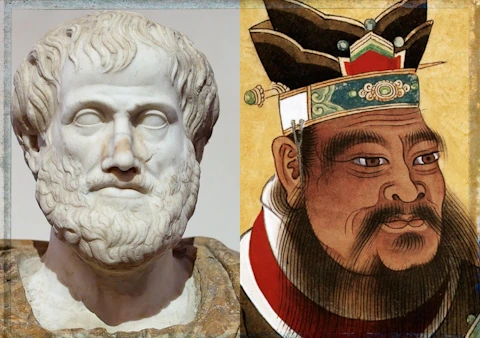
- The Nature of the Self: Perhaps the deepest divergence between Eastern and Western philosophical traditions concerns the nature of selfhood. The dominant Western tradition — from Descartes’ cogito through Kant’s transcendental unity of apperception to contemporary theories of personal identity — tends to take the existence of a persisting self as either self-evident or at least as a basic datum of experience that philosophical analysis must accommodate. The Buddhist doctrine of anattā and the Advaita equation of individual self (ātman) with universal consciousness (Brahman) both, in very different ways, challenge this assumption at its root. This is not merely a theoretical disagreement — it has profound implications for ethics, politics, and the understanding of suffering. If the self is not the fixed, bounded entity that ordinary consciousness assumes, then the pursuit of individual self-interest as the primary aim of life is built on a metaphysical error — and much of modern Western social, economic, and political philosophy is implicated in that error.
- Epistemology and the Role of Experience: Western epistemology, at least in its dominant modern forms, has been shaped by the scientific revolution and tends to privilege third-person, empirically verifiable knowledge. The experimental method, with its emphasis on replicability, quantification, and the control of variables, has been enormously productive in generating knowledge of the external world. Eastern philosophical traditions, by contrast, have developed sophisticated epistemologies that take first-person contemplative experience as a central and indispensable source of knowledge. This does not mean that they are anti-rational — the Nyāya school, the Mādhyamaka, and the Confucian tradition all employ rigorous argumentation — but that they do not reduce all valid knowledge to the third-person model. The question of how these two epistemological approaches can relate to one another — whether contemplative knowledge is reducible to subjective experience in the dismissive sense, or whether it reveals genuine features of reality inaccessible to the third-person standpoint — is one of the most important philosophical questions of our time.
Philosophical Approaches to Life and Ethics:
- Action and Transformation vs. Acceptance and Attunement: Western modernity has been profoundly shaped by what Max Weber called the “disenchantment of the world” — the progressive withdrawal of intrinsic meaning and value from nature, and the redirection of human energy toward the rational mastery and transformation of the environment. Eastern philosophies, particularly Taoism and certain schools of Buddhism, offer a genuinely different orientation: not the conquest of nature but attunement to it; not the assertion of human will but its progressive refinement and, ultimately, its transcendence. This is not passivity — it is a different understanding of what genuine agency consists in. The Wu Wei of Taoism and the “skilful means” (upāya) of Mahāyāna Buddhism both describe forms of effective action that are characterised by their lack of ego-driven compulsion, not by their withdrawal from the world. The challenge this poses to the Western cult of technological and social progress is profound and has not yet been adequately reckoned with.
- The Question of Spiritual and Material Priorities: The contrast between Eastern emphasis on spiritual liberation and Western emphasis on material well-being and empirical knowledge is real, but should not be overstated or romanticised. Indian philosophy, as noted, includes the puruṣārthas of artha and kāma alongside dharma and moksha — material and sensory flourishing are legitimate human goods, not to be dismissed. Confucianism is, in an important sense, a this-worldly philosophy, deeply concerned with the ordering of social and political life. Conversely, Western philosophy has a substantial tradition of asceticism, mysticism, and the critique of materialism — from the Stoics and Neoplatonists through Pascal and Kierkegaard to Simone Weil. The genuine difference is perhaps less about the endorsement of material goods than about the ultimate horizon within which they are situated. In Eastern traditions, the pursuit of material well-being is typically embedded within a framework that regards liberation from conditioned existence as the deepest human aspiration. In dominant strands of Western modernity, no such framework is assumed.
Areas of Genuine Convergence and Productive Tension:
- Process Philosophy and Buddhist Metaphysics: The process philosophy of Alfred North Whitehead, with its emphasis on events rather than substances, becoming rather than being, and the interconnectedness of all things, bears striking resemblances to Buddhist metaphysics. This is not mere coincidence — both are responding to genuine features of experience that substance-ontology struggles to accommodate. The dialogue between process philosophy and Buddhist thought has been one of the most productive areas of cross-cultural philosophy in recent decades.
- Phenomenology and Contemplative Science: The phenomenological tradition, from Husserl through Heidegger and Merleau-Ponty, developed methods for the careful description of first-person experience that have genuine parallels with certain forms of Buddhist and Yogic inquiry. The emerging field of “contemplative science” attempts to bring contemplative first-person methods and third-person scientific methods into productive dialogue — an enterprise that faces formidable methodological challenges but is philosophically important and potentially transformative.
- Ethical and Environmental Considerations: The ethical teachings of Eastern philosophies — the Buddhist emphasis on the interconnectedness of all sentient beings, the Taoist emphasis on living in harmony with natural processes, the Confucian emphasis on responsibility within relationships — offer resources for addressing the ecological and social crises of the present moment that Western ethical frameworks, shaped by individualism and anthropocentrism, have struggled to provide. This does not mean that Eastern philosophical traditions are simply “green” or “progressive” in a modern sense — they are not. But the ontological and ethical frameworks they offer — particularly the insistence on interdependence and the critique of ego-centred existence — speak directly to the conditions that have generated these crises.
This comparative analysis highlights not only the distinctive attributes of Eastern and Western philosophical thought but also the potential for an integrative dialogue that respects the depth and difficulty of both traditions. Such a dialogue is not an exercise in eclecticism — picking attractive ideas from different traditions and assembling them into a personally comfortable synthesis. It is the harder work of genuinely engaging with traditions whose presuppositions challenge one’s own, and of allowing that engagement to be genuinely transformative.
Modern Applications of Eastern Philosophies
Eastern philosophies have found various modern applications that significantly impact contemporary culture, health practices, educational methodologies, and social thinking. This integration, however, must be approached with care. The risk of superficial adoption — stripping practices from their philosophical and ethical context, repackaging them as consumer goods, and evacuating them of their most challenging dimensions — is real and well-documented. The commercialisation of mindfulness, the reduction of yoga to a fitness regime, the deployment of “Zen” as a marketing aesthetic: these are symptoms of a cultural appetite for the fruits of Eastern tradition without its demands. A serious engagement with Eastern philosophy requires acknowledging what it actually asks of us.
Health and Wellness:
- Meditation and Contemplative Practice: The clinical applications of meditation-based practices — most notably Mindfulness-Based Stress Reduction (MBSR), developed by Jon Kabat-Zinn, and Mindfulness-Based Cognitive Therapy (MBCT) — have produced a substantial body of evidence for their effectiveness in reducing stress, anxiety, and the recurrence of depression. This is genuinely valuable, and the translation of Buddhist insight practices into clinical formats has helped many people. At the same time, it is worth noting what is lost in translation: the original context of mindfulness practice (sati) in Theravāda Buddhism is not primarily therapeutic but soteriological. It is a direct means of gaining insight into the three characteristics of existence — impermanence, unsatisfactoriness, and non-self — as a path to liberation. The clinical adaptation, necessarily, brackets these metaphysical and soteriological dimensions. This is not a criticism of MBSR as a clinical intervention; it is a reminder that the clinical version and the original are not the same thing, and that those drawn to the deeper tradition should not confuse them.
- Yoga: A similar dynamic applies to yoga. The classical Yoga of Patañjali’s Yoga Sūtras is a comprehensive philosophical and contemplative system, of which physical posture (āsana) is one element among eight. The postural yoga prevalent in contemporary Western fitness culture represents a significant transformation of the original system — one that has undoubted physical benefits but that has been largely separated from the ethical commitments (the yamas and niyamas), the epistemological framework, and the soteriological goal (the cessation of the fluctuations of consciousness, citta-vṛtti-nirodha) that give the practice its deeper meaning.
Education and Personal Development:
- Mindfulness in Education: The integration of mindfulness-based programmes into educational curricula has expanded significantly in recent years, with evidence suggesting benefits for students’ attention regulation, emotional management, and self-awareness. These programmes draw on Buddhist meditative traditions, though typically in a secular and psychologically framed form. The deeper educational philosophy of Eastern traditions — the Confucian emphasis on the formation of character through disciplined self-cultivation, the Buddhist understanding of ignorance as the root condition requiring educational address, the Taoist suspicion of over-institutionalised learning — offers more fundamental challenges to modern educational philosophy that have not yet been adequately integrated.
- Leadership and Governance: The principles of Taoist and Confucian political philosophy have been applied, with varying degrees of fidelity to the originals, in contemporary discussions of leadership, management, and organisational culture. The Taoist emphasis on the leader who leads without dominating, who creates conditions for others to flourish without asserting personal control, speaks directly to critiques of hierarchical and ego-driven management culture. The Confucian emphasis on moral self-cultivation as the precondition of effective governance — the idea that one cannot order a family, state, or institution without first ordering oneself — is a demand that goes far deeper than most contemporary leadership training is prepared to take seriously.
Sustainable Practices and the Ethics of Nature:
- Ecology and Interdependence: The Taoist and Buddhist understandings of nature as a web of interdependent processes — rather than a collection of resources available for human exploitation — have become increasingly relevant in the context of ecological crisis. Taoist concepts of living in alignment with natural processes, rather than against them, offer both a philosophical critique of the extractive logic of industrial modernity and a positive vision of an alternative relationship with the natural world. Buddhist ethics, with its extension of moral concern to all sentient beings (not just humans), provides grounds for an environmental ethics that goes beyond the anthropocentrism of dominant Western moral frameworks.
- Architecture and Built Environment: The influence of Taoist and Buddhist principles on architecture and spatial design — the emphasis on harmony with natural surroundings, the integration of interior and exterior, the use of natural materials and forms — represents one of the more visible applications of Eastern philosophical sensibility in the contemporary world. These are not merely aesthetic choices but expressions of a philosophical stance toward the relationship between human beings and their environment.
These applications demonstrate both the genuine relevance and the genuine risks of importing Eastern philosophical practices into contemporary Western contexts. The relevance is real: these traditions address conditions — alienation, ecological disruption, the failures of purely instrumental rationality — that Western modernity has generated and has so far struggled to address from its own resources. The risks are equally real: the reduction of demanding philosophical and spiritual systems to consumer products, therapeutic techniques, or management strategies represents not an honouring of these traditions but a domestication of them that neutralises their most challenging insights.
Challenges and Criticisms
A serious engagement with Eastern philosophy must include a serious engagement with the criticisms and challenges it faces — both from external perspectives and, importantly, from within the traditions themselves. These traditions are not monolithic, and some of the most penetrating criticisms of Buddhist, Taoist, or Confucian philosophy come from thinkers working within those same traditions.
Contradictions with Western Worldviews:
- Some of the apparent contradictions between Eastern religious philosophy and Western (particularly Judeo-Christian) metaphysics are genuine philosophical disagreements that cannot be resolved by goodwill alone. The Buddhist doctrine of anattā (non-self) stands in direct tension with the Abrahamic understanding of the soul as an individual spiritual substance created by God and destined for personal immortality. These are not differences of emphasis but substantive disagreements about the structure of reality. Engaging with them seriously requires neither premature synthesis nor dismissal, but careful attention to the arguments on both sides.
- The philosopher William Lane Craig has argued against the Advaitic identification of individual self with Brahman, challenging both the plausibility of an undifferentiated Absolute and the coherence of attributing ignorance to a being that, by definition, is omniscient pure consciousness. These are serious philosophical objections, and Advaitic philosophers have responded to them at length — but the responses are not simple, and the debate has not been resolved. Similarly, Craig’s challenges to many-valued logic in Eastern metaphysics — the use of tetralemmic logic (catuṣkoṭi) in Buddhism, which entertains the possibility that a proposition may be both true and false, or neither — points to a genuine point of friction between traditions. Whether this represents an “inconsistency” in Eastern thought or a more sophisticated logical framework that exceeds the binary categories of classical Western logic is itself a contested philosophical question.
Philosophical and Logical Considerations:
- The use of paradox, apparent contradiction, and deliberate subversion of conceptual frameworks in traditions like Zen and Mādhyamaka Buddhism is sometimes criticised as intellectually irresponsible — a way of avoiding the demands of rigorous argument by appealing to a “higher” truth that transcends logic. This criticism has some force when applied to popular or vulgarised forms of these traditions. But in their most sophisticated forms, the use of paradox and deconstruction is not a flight from logic but its extension: the Mādhyamika uses the tools of rigorous argumentation to demonstrate that every position, including every conceptual description of ultimate reality, is incoherent — not in order to embrace irrationality but to point toward a mode of understanding that exceeds the propositional. Whether this is a philosophically legitimate move is a genuine question, and one that deserves serious engagement rather than dismissal.
- Eastern philosophical traditions have also faced internal criticisms. Buddhism has been challenged on the coherence of the no-self doctrine: if there is no self, who is it that practises, attains liberation, and “blows out”? The Buddhist tradition has developed sophisticated responses to this challenge — the distinction between conventional and ultimate truth, the analysis of the stream of consciousness as a causally continuous process without a persisting substance — but the difficulty is real. Confucianism has been challenged for its tendency toward social conservatism, its historical complicity in the subordination of women, and its potential to become a justification for authoritarian hierarchy rather than a genuine cultivation of virtue. These are not merely Western impositions but criticisms developed by thinkers within the East Asian philosophical tradition itself.
Perceptions, Misinterpretations, and the Risks of Cultural Translation:
- Robert Ellis and other scholars have critiqued the tendencies in Western presentations of Eastern philosophy to either exoticise and idealise these traditions, treating them as repositories of ancient wisdom offering what Western modernity lacks, or to domesticate them, reducing their most challenging dimensions to compatible supplements to Western frameworks. Both tendencies distort the traditions and obstruct genuine understanding. The idealisation of Eastern philosophy as purely peace-loving, ecologically harmonious, and spiritually superior to the West is historically false — Buddhism has been implicated in political violence, Confucianism in authoritarian governance, Taoism in forms of mystification. These are not incidental failures but genuine features of the historical traditions that must be acknowledged.
- The challenge of translation is not merely linguistic but philosophical. Key concepts — dukkha, dharma, Tao, śūnyatā, wu wei, rén — do not have adequate English equivalents, and the choice of translation inevitably shapes interpretation. “Suffering” for dukkha emphasises one dimension and misses others. “Emptiness” for śūnyatā suggests nothing rather than the fullness of dependent origination. “Non-action” for wu wei implies passivity where the original suggests effortless naturalness. A serious engagement with these traditions requires attention to the original languages or, at minimum, to the contested history of translation and interpretation.
These challenges and criticisms are not reasons to dismiss Eastern philosophy but invitations to engage with it more rigorously and honestly. The traditions themselves, at their best, model the kind of intellectual humility and rigorous self-examination that genuine philosophical inquiry requires. The Buddhist injunction to test all teachings against personal experience (ehipassiko — “come and see”), the Confucian insistence on daily self-examination, the Taoist distrust of all fixed positions: these are not mere rhetoric but methodological commitments that, taken seriously, transform the practice of philosophy from the accumulation of positions to a living discipline of inquiry.
Conclusion
By traversing the intellectual terrain of Asian philosophical traditions, we have encountered not a simple store of consoling wisdom but a set of demanding, rigorously developed systems of thought that have sustained serious inquiry across millennia. The insights of Lao Tzu, Siddhartha Gautama, and Confucius — alongside Nāgārjuna, Śaṅkara, Zhuangzi, Dogen, and many others — illuminate the paths to understanding spiritual development, ethical living, and the nature of consciousness and reality. These doctrines do not offer easy answers. They offer something more valuable: rigorous frameworks for asking the right questions, and demanding practices for living those questions rather than merely thinking them.
The comparative analysis of Eastern and Western thought reveals genuine philosophical divergences that cannot be glossed over, as well as genuine areas of convergence and productive tension. The dialogue between these traditions is not merely academically interesting — it is, given the crises of the present moment, practically urgent. The conditions of late modernity — ecological disruption, the atomisation of social life, the exhaustion of purely material definitions of flourishing, the growing recognition that technological power without wisdom generates catastrophe — are precisely the conditions that Eastern philosophical traditions, at their most serious, were developed to address.
Engaging with these ancient teachings in the contemporary world requires more than importing their most palatable elements into existing frameworks. It requires a genuine openness to having one’s own deepest assumptions challenged — about the self, about time, about the relationship between knowledge and liberation, about what it means to live well. This is uncomfortable work. It is also, in the view of every serious practitioner of these traditions across 2,500 years, the most important work a human being can undertake.
Learn more about this topic by reading our complete Series on Eastern philosophies.
Do you consider yourself an enlightened person? Then you should try our personality tests, created especially for people like you who seek a deeper meaning in their existence.
TAKE THE AWARENESS TEST
TAKE THE AWAKENING TEST
TAKE THE GREAT PERSONALITY TEST
MINI SELF-EVALUATION TEST: ARE YOU A SPIRITUAL PERSON?
Read the sentences below and select the ones you agree with and that you think make the most sense.
Count the number of boxes checked and read the corresponding profile.
0: You are not spiritual at all
1-2: You are hardly spiritual
3-4: You are quite spiritual
5-6: You are very spiritual
MINI SELF-ASSESSMENT TEST: ARE YOU A TRUE BUDDHIST?
Select the sentences that you consider in line with the Buddhist view of life.
Record the number of checked boxes and see the relevant profile.
0: You are not Buddhist at all
1-2: You are vaguely Buddhist
3-4: There is a growing Buddha in you
5-6: You are Siddhartha Gautama himself!