


The concept of “selling one’s soul to the devil” is one of the most enduring and psychologically charged metaphors in human culture. It speaks to something elemental in our experience: the tension between what we are and what we desire to become, between the imperatives of the spirit and the seductions of the world. It is not merely a theological curiosity or a literary device — it is a mirror held up to the deepest fault lines of human existence. By examining its origins, its literary elaborations, its cross-cultural spiritual resonance, and its modern metamorphoses, we can begin to understand why this ancient image continues to haunt us.
Origins of the Concept
The notion of making a pact with the devil originates primarily within Christian theology and medieval European folklore, though its roots reach deeper into universal human anxieties about transgression, forbidden knowledge, and the corrupting weight of desire. In medieval Europe, the devil was conceived not merely as an abstract force of evil but as an active agent — a shrewd negotiator who sought to ensnare human souls by appealing to their most intimate weaknesses: pride, lust for power, the hunger for recognition.
The biblical foundations are significant. The temptation of Christ (Matthew 4:1-11), in which Satan offers dominion over all kingdoms of the world in exchange for an act of submission, establishes the archetypal structure of the diabolical bargain: something immense and real is offered in exchange for something even more fundamental — one’s alignment with the sacred. The Book of Job presents a subtler and more disturbing variation, in which God Himself permits Satan to test a righteous man through suffering and loss. In Job’s trials, the soul is not sold but wagered — and the wager reveals that divine permission and diabolical assault are not always easy to distinguish.
The concept became institutionalized during the Middle Ages with stories of individuals who allegedly made literal pacts with Satan. These tales were embedded in a broader framework of fear surrounding witchcraft, heresy, and the perceived fragility of Christian civilization. Pope Innocent VIII’s 1484 papal bull Summis desiderantes affectibus formally associated witches with diabolical contracts, lending theological authority to popular belief. Inquisitorial trials frequently accused the accused of having bartered their souls for supernatural powers — a charge that served not only theological but also political and social functions, marking certain individuals as irredeemably other.
Philosophically, these stories dramatize humanity’s most vertiginous anxiety: the possibility of losing one’s essence entirely through a single act of pride or despair. They also pose a question that no subsequent century has managed to answer: what does it mean to trade one’s integrity for rewards that, however magnificent, are always already passing away?
Christopher Marlowe’s Doctor Faustus
Christopher Marlowe’s Doctor Faustus (written between 1588–1592) remains the most searching and unsettling theatrical exploration of the diabolical bargain in the Western canon. The play follows Dr. John Faustus — a scholar of formidable attainment who has exhausted the limits of conventional knowledge and turns to necromancy in his hunger for something beyond. He makes a pact with Mephistopheles, Satan’s emissary, exchanging his soul for twenty-four years of unlimited power, knowledge, and pleasure.
What makes Marlowe’s treatment philosophically remarkable is that Faustus is not a simple villain. He is a man who has genuinely reached the ceiling of human understanding as his era defines it, and who cannot accept that ceiling as final. His tragedy is not one of evil but of an excess of ambition colliding with a universe that does not reward such excess. Marlowe uses Faustus’ downfall to interrogate profoundly uncomfortable questions: Is Faustus damned because he dares to seek what lies beyond prescribed limits? Or is it his refusal to repent — his attachment to the bargain even as its emptiness becomes apparent — that seals his fate? The play refuses to answer cleanly.
One key passage encapsulates Faustus’ internal entrapment:
“Why then belike we must sin / And so consequently die! / Ay we must die an everlasting death.”
What strikes the careful reader here is the grammar of inevitability. Faustus does not say he will sin — he says he must. He has, in a sense, philosophized himself into damnation before Mephistopheles arrives. This is Marlowe’s most psychologically acute insight: the soul is not stolen, it is surrendered incrementally, through small rationalizations, through the decision to stop resisting. Mephistopheles himself, in a moment of devastating honesty, tells Faustus: “Why, this is hell, nor am I out of it.” Hell, in Marlowe’s universe, is not a location one arrives at after death — it is a condition of consciousness that begins the moment one abandons one’s deeper nature.
The play also reflects the profound tensions of the Elizabethan moment: the collision between medieval Christian orthodoxy and the emerging humanist ideals of the Renaissance, which celebrated intellectual ambition and the expansion of human capability. Faustus stands at this crossroads, and Marlowe offers no comfort: the Renaissance dream of unlimited self-transcendence has a shadow, and that shadow is the possibility of losing the very self one sought to transcend.
Goethe’s Contribution
Johann Wolfgang von Goethe’s Faust (Part I, 1808; Part II, 1832) is not merely a response to Marlowe — it is a philosophical counterargument. Where Marlowe’s Faustus ends in damnation and despair, Goethe’s Faust ends in redemption. But this apparent optimism deserves careful scrutiny, because Goethe’s vision is far more complex than a simple happy ending.

Goethe reimagines Faust not as a man seduced by pleasure but as one consumed by a genuine metaphysical restlessness — an insatiable quest for meaning and transcendence that the visible world consistently fails to satisfy. His pact with Mephistopheles is framed as a wager: Faust bets that Mephistopheles will never be able to offer him a moment so fulfilling that he will wish it to last forever. This is not the bargain of a man who wants worldly success — it is the wager of a man who has ceased to believe that satisfaction is possible at all. His is a spiritual crisis disguised as intellectual ambition.
Mephistopheles describes himself in a line of genuine philosophical weight:
“I am part of that power which eternally wills evil yet eternally works good.”
This paradox is the theological and philosophical center of Goethe’s work. Evil, in this framework, is not simply the opposite of good — it is the resistance and friction through which the soul is forced to grow. Mephistopheles serves, despite himself, as an instrument of Faust’s development. The devil becomes, in a sense, a cosmic catalyst.
Yet Goethe’s optimism must not be mistaken for naivety. Faust achieves salvation not because he was virtuous but because he never ceased to strive — even when that striving led him into moral catastrophe, including the destruction of Philemon and Baucis, the elderly couple whose home he orders demolished in a fit of imperial impatience. The redemption Goethe offers is available only to the relentlessly striving soul, and it comes at an enormous cost to others. This is not the comfortable redemption of easy spirituality — it is a hard-won and morally ambiguous grace, earned through a lifetime of error, longing, and refusal to be satisfied with any partial answer.
The contrast between Marlowe and Goethe represents, in many ways, the two poles of the spiritual imagination: the vision of the soul as fragile and easily lost, and the vision of the soul as ultimately indestructible but requiring the full weight of experience — including suffering and failure — to realize itself.
Notable Anecdotes and Historical Legends
Throughout history, numerous figures have been accused — or have cultivated the legend themselves — of metaphorically or literally “selling their souls.” These stories are never purely biographical; they reflect deep cultural anxieties about the price of exceptional talent and the transgressive power of those who exceed normal human limits.
- Niccolò Paganini, the virtuoso violinist (1782–1840), was so technically extraordinary that contemporaries found his abilities literally incomprehensible within natural categories. Rumors of a Satanic pact circulated widely during his lifetime. Paganini, with characteristic cynicism and flair, did little to dispel them — understanding, perhaps, that mystery served his reputation. The Catholic Church initially refused him a Christian burial, though this was later reversed. His case illustrates how genius, when it surpasses what society can explain, is readily coded as diabolic.
- Robert Johnson, the blues musician (1911–1938), is perhaps the most mythologized case in American cultural history. The legend that he sold his soul at a Mississippi crossroads at midnight to receive his extraordinary guitar skills has become inseparable from the Blues tradition itself. Whether Johnson cultivated the legend or it was attributed to him posthumously is unclear, but its persistence speaks to something real: the crossroads as a liminal space, a place of radical choice, where the ordinary rules no longer apply.
- Lord Byron was frequently likened to a Faustian figure during his lifetime — not merely for his scandalous behavior but for the quality of his restlessness: a man who seemed genuinely incapable of accepting any given condition of existence as final, who consumed and discarded experiences with an exhausting hunger that suggested not pleasure but a deeper, unassuageable lack.
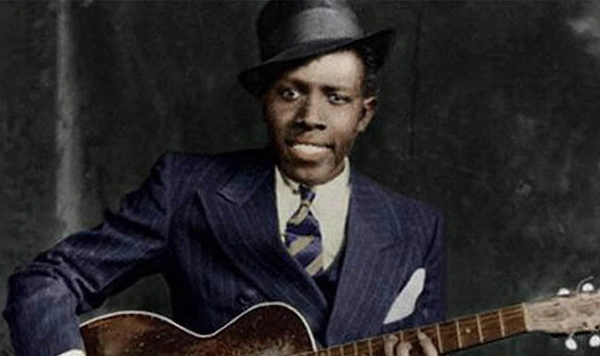
These legends illuminate something important: exceptional ability, transgressive behavior, and an apparent immunity to ordinary moral constraints all tend to generate, in the cultural imagination, the hypothesis of a forbidden bargain. They reinforce cultural archetypes surrounding genius and transgression — and they reveal a persistent cultural ambivalence: we simultaneously admire and suspect those who exceed the ordinary.
Evolution Over Time
Over the centuries, the Faustian bargain has undergone a significant transformation: from a theological cautionary tale about eternal damnation to a secular metaphor for ethical compromise, psychological fragmentation, and the corrupting effects of power. This is not merely a shift in vocabulary — it reflects a genuine change in what Western culture regards as the ultimate loss.
In the medieval framework, the soul had a precise theological definition and the stakes were cosmic: heaven or hell, eternal life or eternal death. In the modern secular context, what is lost when one “sells one’s soul” is harder to name but no less real: authenticity, integrity, the capacity for genuine relationship, inner peace, the ability to look at oneself without flinching. Contemporary representations locate the horror not in supernatural punishment but in the psychological consequences — the guilt, the alienation, the hollowness that follows when one has subordinated everything essential to everything instrumental.
- In cinema (The Devil’s Advocate, 1997), the diabolical bargain becomes a critique of a legal and corporate culture built on the systematic subordination of conscience to success.
- In literature, Oscar Wilde’s The Picture of Dorian Gray reconfigures the Faustian structure with brilliant precision: Dorian’s portrait absorbs the corruption that his choices generate, allowing him to remain beautiful while becoming inwardly monstrous — a perfect image of the dissociation between surface and substance that characterizes moral decay in modernity.
This evolution reflects a deepening psychological understanding of what corruption actually looks like — not dramatic sulfurous punishment, but the slow, barely perceptible erosion of everything that made life worth living in the first place.
Cultural Adaptations and Artistic Expressions
Artists across every medium have returned obsessively to Faustian themes, finding in them a structure flexible enough to carry the particular anxieties of each era:
- Music: Charles-François Gounod’s opera Faust (1859) transmutes Goethe’s philosophical drama into lyric tragedy, emphasizing the human cost of Mephistopheles’ interference in Marguerite’s life — a dimension Goethe’s cosmic optimism sometimes risks underweighting.
- Visual Art: Eugène Delacroix’s lithograph series for Faust (1828) captures the work’s uncanny atmosphere with extraordinary power — particularly his rendering of Mephistopheles as something between seducer and abyss.
- Film: Rosemary’s Baby (1968) and its many descendants use the diabolical pact as an allegory not only for personal compromise but for the horror of institutional complicity — the discovery that the system within which one has sought safety is itself in league with destructive forces.
These adaptations share a common insight: the Faustian bargain is not merely a story about an individual’s fall. It is a story about systems — social, psychological, spiritual — that present corruption as opportunity and call the refusal of corruption naivety.
Spiritual Aspects of Selling One’s Soul
The concept of selling one’s soul is, at its most serious, a spiritual diagnosis — a description of what happens when a human being systematically inverts the hierarchy of values, placing the transient above the eternal, the instrumental above the sacred, the appearance of power above the reality of inner life. Across religious and philosophical systems, the soul is understood as the axis of genuine existence — not merely a religious concept but the name for whatever it is in us that is capable of real knowledge, real love, and real freedom. To “sell” this essence is to make oneself into a kind of instrument, functional in the world but no longer genuinely alive to it.
Theological Interpretations
Christianity: The Soul as Divine Reflection
In Christian theology, the soul is sacred because it bears the imago Dei — the image of God, as affirmed in Genesis 1:27. This is not a metaphor but a claim about ontological constitution: the human soul participates, however partially and obscuredly, in the divine nature. To sell it is therefore not merely a personal catastrophe — it is a kind of cosmological vandalism, a willful defacement of something whose value cannot be calculated. This theological weight is present in the warning of Matthew 16:26: “What good will it be for someone to gain the whole world, yet forfeit their soul? Or what can anyone give in exchange for their soul?”
The question is not rhetorical in the way it might first appear. Jesus is not simply saying that the soul is more valuable than the world. He is pointing to the structural impossibility of the transaction: if the soul is the precondition for valuing anything, then its loss does not merely leave one poorer — it leaves one incapable of experiencing what one has gained. Faustus, in his twenty-four years of unlimited power, is already in this condition: the pleasures he sought have become hollow before he can reach them, because the capacity for genuine satisfaction has been traded away.
The account of Adam and Eve’s fall in Genesis 3 provides the archetypal pattern: the original sin is precisely the willingness to trust a voice that promises knowledge without submission, transcendence without relationship, godhood without grace. Selling one’s soul re-enacts this primordial mistake — not in a garden but in the specific circumstances of each human life.

Islamic Perspectives
In Islam, the soul (ruh) is a trust from Allah — something entrusted to human beings for the duration of their earthly existence, not something they own or can dispose of freely. The concept of Tawhid (the absolute unity of God) means that any fundamental allegiance to something other than Allah is a form of idolatry — a category that encompasses not only the worship of statues but the worship of one’s own desires, one’s ambitions, or the promises of any power that presents itself as an alternative to divine guidance. The Quran’s frequent warnings against following the footsteps of Shaytan (Surah Al-Baqarah 2:208) describe not a dramatic supernatural capitulation but a gradual drift — step by step, compromise by compromise — away from the straight path.
Hinduism and Karma
Hindu philosophy addresses the same territory through the lens of dharma, karma, and maya. Maya — the illusory character of material existence — is not simply an epistemological problem; it is a seduction. The world of names and forms presents itself as ultimately real and ultimately satisfying, and the soul that accepts this presentation binds itself ever more tightly to samsara — the cycle of conditioned existence driven by craving and aversion. To pursue wealth or power at the expense of one’s dharma is to generate the karmic conditions for further entanglement, further unconsciousness, further distance from liberation (moksha). The Faustian bargain, in Hindu terms, is ultimately a transaction with maya itself — and like all such transactions, it delivers less than it promises and costs more than one expected.
Buddhism: Attachment as Spiritual Decline
Buddhism approaches the same problem from a distinctive angle. The Buddha’s teaching that craving (tanha) is the root of suffering (dukkha) does not mean that desire is simply wrong — it means that the structure of grasping, of reaching for objects in the hope that they will fill an inner emptiness, is inherently self-defeating. The Faustian bargain is, in Buddhist terms, the ultimate expression of this structure: the belief that something external — power, knowledge, pleasure, fame — can satisfy what is, at its root, a spiritual hunger. Buddhism goes further than most traditions in denying that there is a fixed, eternal soul to sell; but this makes the bargain not less tragic but more so. What is forfeited is not an eternal substance but the possibility of awakening — the possibility of seeing through the mechanism of craving and stepping free of it. Pursuing shortcuts to fulfillment through unethical means represents, in Buddhist terms, a profound deepening of suffering, not an escape from it.
Cross-Cultural Symbolism
The Soul as Sacred Currency
Across cultures, the idea of selling one’s soul symbolizes trading something irreplaceable for something temporary — and doing so with open eyes, which is what makes it tragic rather than merely unfortunate. In many indigenous traditions worldwide, the soul is not conceived as a private possession but as the point of contact between the individual and the larger living whole — the community, the ancestors, the land, the cosmos. To betray this connection is to fracture something that extends far beyond oneself.
- In Yoruba spirituality (West Africa), the ori-inu — the inner spiritual head or higher self — is the governing principle of one’s destiny. Alignment with one’s ori-inu is the condition of genuine flourishing; betrayal of it through the pursuit of selfish goals disrupts not only personal well-being but one’s relationship with the ancestral and divine order.
- In Shinto belief (Japan), purity (kegare and its absence) is understood as a quality of relationship — with nature, with ancestors, with the kami. Corruption is not merely a moral failure but a ritual and spiritual pollution that disrupts the harmony upon which all life depends. To forsake this harmony for personal gain is to make oneself ritually unclean in the deepest sense.
Symbolic Significance
Estrangement From Divine Purpose
Selling one’s soul can be understood, across traditions, as a specific form of spiritual self-alienation: the act of placing the ego’s agenda — its hunger for security, recognition, power, or pleasure — above the call of whatever is most deeply real in one’s own nature. In Dante’s Inferno, the damned are not punished arbitrarily — they inhabit conditions that are the logical extensions of their own choices, their own refusals. The glutton lies in filth; the violent wade in blood. Hell, in Dante’s vision, is a place of absolute self-revelation — which is precisely why it is terrible.
In Sufi poetry, particularly in the work of Rumi and Hafiz, earthly attachments are likened to chains that bind the soul to the surface of existence, preventing it from recognizing its own depth. The market of the world, with all its dazzling offers, is a distraction from the only transaction that matters: the return of the soul to its origin, which is also its destination.
The Struggle Between Good and Evil
At the spiritual level, the diabolical bargain dramatizes humanity’s most fundamental inner conflict: the competition between the part of us that knows what we are — sacred, connected, capable of genuine love and genuine knowledge — and the part that is willing to trade all of this for something smaller, harder, more immediately available. This duality is not merely a Christian concern — it appears in Zoroastrianism, in Hindu accounts of asura and deva natures within the human being, in the Buddhist teaching on the two kinds of action — those that increase bondage and those that lead toward liberation. The Faustian bargain represents, in all these frameworks, a choice for bondage — not made in ignorance, which would be forgivable, but made with full knowledge of what is at stake.
Redemption After Selling One’s Soul
This is where spiritual traditions diverge most sharply, and where the question becomes most personally urgent. Marlowe’s Faustus ends in despair — the final hour of his life is one of the most harrowing passages in English literature, as he watches time run out and understands, too late, what he has done. His inability to repent is itself the damnation: not a punishment imposed from outside but the final consequence of a long habituation to self-justification.
Goethe’s Faust suggests a different possibility — one where sustained striving, even through error and catastrophe, makes the soul available to grace. But Goethe is careful not to make this too easy: Faust’s salvation is not cheap, and the suffering of those he has wronged along the way is not simply cancelled by his final redemption.
Most spiritual traditions hold open the possibility of return — but they are careful about the conditions. Christian theology insists on genuine contrition, not merely regret at consequences. Buddhist teaching points to the possibility of turning the mind toward clarity at any moment — but acknowledges that the habits of craving and aversion are deeply ingrained and do not dissolve easily. The honest spiritual assessment is this: redemption is possible, but it requires an honesty about what one has done and what it has cost — an honesty that the ego, which performed the original bargain, is systematically resistant to.
Modern Spiritual Interpretations
In contemporary spirituality, increasingly practiced outside organized religion and institutional frameworks, the Faustian bargain has been reinterpreted in psychological and existential terms — but the danger of these reinterpretations is that they can soften what is, at root, a serious diagnosis.
- Selling one’s soul might symbolize losing authenticity through the accumulation of compulsive social conformity — the slow disappearance of one’s actual self under the pressure of performing an acceptable identity.
- It might describe the sacrifice of inner peace for external validation — the exchange of genuine inner life for the approval of people one does not even particularly respect.

Contemporary teachers like Eckhart Tolle speak of reconnecting with one’s deeper nature beneath the noise of ego — a teaching that echoes the ancient warnings against Faustian bargaining without always acknowledging the depth of the problem. The difficulty with much modern spiritual discourse is precisely the tendency to present the return from this kind of self-betrayal as straightforward, achievable through relatively painless practices, available to anyone willing to adopt the right techniques. The older traditions were less reassuring: they understood that the soul can be damaged by its choices in ways that require not techniques but genuine transformation — a transformation that is demanding, slow, and cannot be bypassed.
Psychological Motivations
From a psychological perspective, the Faustian bargain does not emerge from a vacuum. It is typically the product of specific inner conditions: a profound sense of inadequacy or unworthiness that cannot be metabolized through ordinary means; an existential despair about the possibility of genuine satisfaction; a fundamental distrust in the slow, uncertain processes of authentic growth. When these conditions converge, the offer of a shortcut — power without development, recognition without genuine achievement, pleasure without the willingness to be genuinely present to life — can seem not merely attractive but necessary.
Carl Jung’s analysis of the Shadow archetype is particularly relevant here. The Shadow — the repository of everything we have repressed, denied, or refused to acknowledge in ourselves — does not disappear when we refuse to look at it. It finds other channels. The projection of the Shadow onto a figure like Mephistopheles — the brilliant, cynical enabler who promises everything and costs everything — is, in Jungian terms, a failure of psychological integration: the refusal to take responsibility for one’s own darkness by externalizing it. The man who makes a Faustian bargain is, psychologically, one who has not made peace with his own limitations — and who is therefore vulnerable to any power that promises to eliminate them.
Metaphysical Implications
Free Will vs Determinism
The diabolical bargain raises, with unusual sharpness, the deepest question in moral philosophy: are we truly free? If Faustus chooses damnation, is this a genuine exercise of freedom — or the inevitable expression of a character formed by conditions he did not choose? St. Augustine’s position is instructive here: human beings possess free will, but that will is weakened and distorted by the inheritance of original sin — by the deep structural tendency to prefer the lesser good over the greater, the immediate over the eternal, the self over the sacred. Freedom, in Augustine’s account, is not simply the ability to choose anything; it is the ability to choose rightly, and that ability has been compromised.
Sartre’s existentialist response insists on radical freedom: even in the most constrained circumstances, human beings retain ultimate responsibility for their choices, and no appeal to prior conditioning can fully excuse them. But Sartre’s position, while important as a corrective to determinism, may underestimate the degree to which prior choices — prior decisions to look away, to prioritize comfort over truth, to make small Faustian bargains long before the large one — accumulate into a character that is no longer easily capable of choosing otherwise.
This tension between freedom and formation is central to understanding why figures like Faustus make their fateful decisions despite knowing what they cost. Their stories are not warnings about unusual people in unusual circumstances — they are portraits of an ordinary psychological process carried to its logical conclusion.
The Nature of the Soul
What exactly is being sold? This question, which might seem merely scholastic, has genuine existential weight:
- If the soul is an immutable divine essence — the permanent, indestructible spark of divinity at the center of every human being — then the idea of “selling” it is, in one sense, impossible. You cannot transfer what is not yours to transfer. What the Faustian bargain actually accomplishes, in this theological framework, is not a transfer of ownership but a deliberate severing of relationship — a turning away so radical and so sustained that it becomes constitutive of one’s existence.
- If the soul is better understood as a dynamic process — the ongoing activity of genuine reflection, genuine love, genuine moral seriousness — then selling it means something more concrete: allowing this process to atrophy through neglect and substitution, replacing inner life with external performance, replacing genuine growth with the management of appearances.
Different philosophical traditions offer varying perspectives on these issues. Christian theology, with its emphasis on the soul as eternal and individually significant before God, treats its sale as a genuine catastrophe — the loss of one’s most essential identity. Eastern philosophies, particularly Advaita Vedanta and certain schools of Buddhism, question whether there is an individual soul to sell at all — the atman, in Advaita, is identical with Brahman, universal consciousness, and cannot be alienated from its source; what the Faustian bargain trades is not the soul itself but the possibility of recognizing what one already, inescapably, is. In this framework, the tragedy is not loss but ignorance — and the remedy is not repentance in the traditional sense but awakening to a reality that was never actually absent.
Eternal Damnation vs Redemption
Metaphysical discussions of the diabolical bargain converge on a single agonizing question: is the damage reversible? Marlowe answers no — or at least, no without a repentance that his Faustus proves psychologically incapable of. Goethe answers yes — but at the cost of a lifetime of striving and the suffering of innocents along the way. The Christian tradition, at its most generous, insists that divine mercy extends to even the most extreme cases of spiritual self-betrayal — but it is careful to distinguish genuine repentance from mere regret.
This is not an abstract theological debate. It bears directly on how we understand accountability in our own lives:
- If consequences are truly irreversible, the most important thing is prevention — understanding the mechanisms of spiritual compromise before they operate on us.
- If redemption is always available, the most important thing is honesty — the willingness to see clearly what one has done, without minimization, without the rationalizations that made the original bargain seem acceptable.
The honest answer, across traditions, is probably neither pure Marlovian fatalism nor Goethean optimism. The soul is neither infinitely fragile — destroyed by a single wrong choice — nor infinitely resilient — indifferent to the cumulative weight of sustained self-betrayal. It is, rather, something that requires tending: capable of genuine damage, capable of genuine healing, but neither automatically destroyed nor automatically restored. These questions challenge us to consider not only what happens after death but how seriously we take the quality of our inner life now — and whether we are willing to pay the price of genuine attention to it.
Controversial Theories and Modern Narratives
Relevance of the Faustian Bargain in a Secular Age
In modern times, the concept of “selling one’s soul” has migrated from explicitly religious territory into the broader landscape of secular ethics and existential philosophy — and in doing so, it has arguably become more rather than less relevant. As the external scaffolding of religious belief has weakened for many people, the internal question it raised has not gone away: what is the center of one’s being, and what are the conditions under which it can be compromised or lost?
Some theorists argue that secular modernity has simply replaced the soul with other concepts — identity, authenticity, autonomy, integrity — without fully reckoning with the depth of what the older framework was pointing to. The consequences of unchecked ambition, the corrosive effects of systematic self-betrayal, the specific spiritual emptiness that follows on the attainment of everything one has worked for — these phenomena are as visible in secular life as in any religious framework, and the secular vocabulary has not always proven adequate to describe them.

- In corporate culture, the individual who compromises their values incrementally — accepting each new demand as necessary, adjusting their sense of what is acceptable to match what is required — is performing a slow-motion Faustian bargain that may not produce a single dramatic moment of choice but arrives at the same destination.
- In politics, the leader who enters public life with genuine ideals and emerges years later as an instrument of the very forces they once opposed has made a bargain whose terms were never written down and never formally agreed to — which is perhaps what makes it so difficult to recognize from the inside.
Technology and the New Faustian Dilemma
The technological transformations of the early twenty-first century have created what may be the most genuinely novel variant of the Faustian dilemma in human history — one that does not require a single dramatic act of choice but operates through the accumulated surrender of small things:
- The rise of artificial intelligence and algorithmic culture raises profound questions about the trade of human autonomy, attention, and privacy for convenience, connection, and entertainment. The terms of this exchange are rarely presented explicitly; they emerge gradually, through the design of systems whose incentive structures are oriented toward engagement rather than human flourishing. Are we “selling our souls” by surrendering what remains of our capacity for genuine solitude, genuine reflection, and genuine encounter to devices optimized for continuous stimulation?
- Genetic engineering and transhumanism present a more philosophically profound version of the same question: what exactly are we when we have redesigned ourselves out of every limitation that previously defined us? The hunger to transcend biological constraint is ancient — it is Faustus’ hunger, and it is not inherently wrong. But the question of what is lost, as well as gained, when every imperfection becomes in principle correctable, deserves far more serious attention than it typically receives in the breathless discourse of technological progress.
Commodification of Spirituality
One of the more troubling contemporary expressions of the Faustian dynamic is the commodification of spiritual practice itself. Mindfulness meditation, yoga, contemplative practices drawn from virtually every tradition — these have entered the mainstream in forms that often bear little resemblance to their origins. They are packaged as tools for productivity, stress management, and competitive advantage; their implicit promise is a kind of inner optimization that mirrors the logic of the market rather than challenging it.
This is not a trivial problem. It means that the very practices historically understood as antidotes to the Faustian mentality — the cultivation of stillness, presence, and detachment from outcomes — are being recruited in its service. The meditating executive who sits for twenty minutes each morning in order to perform more efficiently in the afternoon has not engaged with the spiritual tradition he believes he is drawing on. He has made a smaller version of the bargain: using the form of inner life in the service of the very values that inner life was meant to interrogate.
Modern Narratives in Popular Culture
The theme of selling one’s soul continues to generate powerful storytelling precisely because the underlying human experience it describes remains unchanged, whatever form it takes in a given era:
- Margaret Atwood’s The Handmaid’s Tale explores not the individual’s voluntary Faustian choice but the structural conditions under which people are coerced into complicity — the slow normalization of the intolerable that makes each individual accommodation seem, in isolation, survivable and even rational.
- The Devil Wears Prada (2006) is, at one level, a light entertainment — but its enduring resonance comes from the accuracy with which it depicts the mechanism of incremental compromise: the way the ego accommodates itself, step by step, to conditions it would have found unconscionable at the outset.
- Artists like Bob Dylan and others have drawn on Faustian imagery to reflect on the corrupting dimensions of fame — the discovery that the recognition one sought arrives accompanied by a kind of self-estrangement, as the person who is celebrated is no longer quite the same as the person who sought the recognition.
Conclusion
The enduring power of “making a deal with the devil” lies not in its supernatural machinery — the contracts written in blood, the devil at the crossroads, the twenty-four years of borrowed time — but in the accuracy with which it describes a recognizable human experience: the experience of choosing something that requires trading away the very capacity for genuine satisfaction; of pursuing an image of fulfillment at the cost of the inner life from which fulfillment actually arises.
This is not a comfortable concept, and it should not be made comfortable. The temptation to soften its message — to present the Faustian bargain as always recoverable, the soul as always resilient, the damage as always reparable through the right practices or the right intention — is itself a form of the evasion the concept was designed to challenge. The spiritual traditions that generated this metaphor were, in their most honest moments, quite serious about the possibility of genuine damage to the inner life — damage that does not always announce itself dramatically, that accumulates quietly through small decisions made in the wrong direction, and that can only be addressed through a level of honesty about oneself that requires something more than ordinary courage.
In a world where technological acceleration, economic pressure, and cultural noise make it increasingly difficult to maintain genuine interiority, the figure of Faustus is not an archaic warning about a danger that no longer exists. It is a portrait of a temptation that has, if anything, become more sophisticated and more pervasive. The offers arrive not from a medieval devil in a smoking contract but from systems, structures, and cultural assumptions that make the subordination of the essential to the instrumental seem not only natural but virtuous.
The question each tradition poses, in its own language, remains what it has always been: what is actually most real in you, and what are you willing to do — or not do — to remain in contact with it? That question does not become easier with time. It becomes more urgent. And it cannot be answered by any power outside ourselves, at any price, however apparently attractive the terms.

ARE YOU A MORALLY WHOLE PERSON?
Review the following statements and select those with which you completely agree.
Sum up the selected boxes and check the related profile.
0: You are not morally whole at all
1-2: You are poorly morally whole
3-4: Your moral integrity is fluctuating
5-6: You are a person of moral integrity
Further details on moral integrity